Subheader

A forever in-work compendium of Marvel and DC canon immigrants. What's a canon immigrant? Go here to find out!
Showing posts with label Batman. Show all posts

Friday, December 6, 2019

Flashback Friday: Marsha, Queen of Diamonds

Each Friday, I take one of the entries from my old Super Posts and expand it into its own featured article.

This week: Marsha, Queen of Diamonds!


Marsha is a diamond thief who first appears in the episode of the same name (November 1966). She wants to get her hands on the Bat-Diamond, so she blackmails Batman into marrying her, which would have the added benefit of giving her access to the Batcave and his secret identity. Needless to say, Batman manages to find a way to escape and save Robin, Commissioner Gordon, and Chief O'Hara in the process.


Although this villain from the Batman tv series (1966-1968) hasn't yet made a real appearance in comics, she was mentioned by the Riddler in Secret Origins Special #1 (June 1989).  At the time, the rights to the 60s series were in a strange sort of limbo, which is why the tv-original characters were never used in the comics. But that's all sorted out now, so there's no telling when Marsha will appear for real!

Wednesday, December 4, 2019

Character Spotlight: Dr. Chase Meridian

It's funny how standards slip as deadlines loom. Normally I don't include immigrants until they've been in a mainstream universe, but I didn't want the last couple weeks of this year to not have new content (even though I started doing Flashback Friday for just such an occasion), so here we are.

Batman Forever (1995) wanted to be a serious look into the psychology of Batman. You probably wouldn't recognize that from the final product, which had most of that particular plotline excised, but one artifact that remains is Dr. Chase Meridian, Bruce Wayne's love interest for the movie and a psychiatrist who is obsessed with Batman. Her name is a pun because she was supposed to help Bruce find a balance between his two personas; ie, "chase" the "meridian".


Despite being played by Nicole Kidman at her Nicole Kidmanest in a very successful movie (second highest-grossing movie of 1995 and highest-grossing opening weekend, which it held until 1997), Chase Meridian never made an impact on the comics. Even when she finally crossed over, it was only in an out-of-continuity digital comic. Specifically, it was Legends of the Dark Knight #77-79 (November 2013), which was later collected in Legends of the Dark Knight 100-Page Spectacular #4 (September 2014). Notably, she has a completely different look than the movie.


Personally, I think Dr. Meridian could fill a hole in the Batman universe. You'd think a series with an asylum as a major set piece would have a recurring psychologist/psychiatrist character. In fact, it has two, but they're both villains: Harley Quinn and Hugo Strange. It would be very beneficial, I think, to have Chase as a supervillain expert who also doesn't play their games.


Friday, October 25, 2019

Flashback Friday: Gray Ghost

Each Friday, I take one of the entries from my old Super Posts and expand it into its own featured article.

This week: Gray Ghost!


As most people know, Batman is inspired by earlier pulp heroes such as the Shadow and Zorro. In fact, "inspired" is putting it charitably, considering several of Batman's earliest stories were plagiarized Shadow stories. But the comics and other adaptations like to pay homage to this in various ways, with the main one becoming that the Waynes went to see a Zorro film on the day they died (which Zorro movie it was changes based on when the story takes place, but it's usually The Mark of Zorro).


Batman: The Animated Series, however, provided its own twist on this idea. In the episode "Beware the Gray Ghost" (1992), we learn of an old tv show that Bruce loved to watch as a kid. The Gray Ghost is very inspired by the Shadow, and Batman was, in turn, inspired by the Gray Ghost. In fact, Batman's Batcave is an exact replica of the Gray Ghost's base of operations. The episode involves the Simon Trent, the actor who played the Gray Ghost (voiced by Adam West), dressing as the Gray Ghost and teaming with Batman to help solve a series of bombings based on an episode of the series.


The first time the Grey Ghost was mentioned in comics was Batman: Gotham Adventures #3 (June 1998), when Scarecrow's fear formula made it seem like Batman was dressed as the character.


The Batman Adventures #14 (May 2004) featured Simon Trent as the Gray Ghost and the creation of a Gray Ghost movie.


But both of those are extensions of the DCAU. The first time the Gray Ghost was seen outside of that world was, surprisingly, the Grant Morrison Vertigo title, Joe the Barbarian #1 (January 2010). This series is about a boy who hallucinates a fantasy adventure involving his toys thanks to low blood sugar, and Gray Ghost - along with Batman - is one of the characters who appears.


When he finally appeared in mainstream DC comics, it was in a much different form.  In Batgirl #15 (November 2010), the Grey Ghost appears as Clancy Johnson, Batgirl's self-proclaimed guardian angel. Incidentally, he's also the Mad Bomber (the villain of "Beware the Gray Ghost"). Clancy based his secret identity on the Grey Ghost tv show, which also now exists in DC Comics.


And then Simon Trent appeared as a theatre teacher in Gotham Academy, which I've previously discussed.

What I find most interesting about all of these appearances is that they keep the Gray Ghost a fictional entity. Writers could've easily made him a real hero, perhaps one active in the 30s. But they didn't. In some ways I prefer that.

The only (potential) example I can find otherwise is Batman Beyond 2.0 #40 (November 2014). I can't tell if this is Simon Trent taking up the mantle again or someone inspired by the Gray Ghost franchise. Either way, this series takes place on Earth-12, which is essentially the DCAU world in comics form.


Friday, October 18, 2019

Flashback Friday: The Batcave

Each Friday, I take one of the entries from my old Super Posts and expand it into its own featured article.

This week: The Batcave!


Originally, the closest thing Batman had to a Batcave was an old barn he used for a hangar/garage, which he accessed via underground tunnel connected to Wayne Manor. You can see it here in Detective Comics #48 (December 1940). 


In Batman #12 (June 1942), we see underground hangars as an extension of the above idea, but they're presented as man-made. Incidentally, Batman #12 is the first appearance of Batman's trophy room, which is housed in Wayne Manor and mainly exists as a way for Batman and Robin to talk about past cases.


In 1943, Batman received his first serial, also called Batman. In it, Batman was a government agent and his base was a cave called The Bat's Cave, which debuted in the chapter of the same name (July 1943). It didn't house much except a desk and some science equipment. Although it was thematically appropriate, the only reason for it was as a money-saving measure since the studio already had a cave set.


It was thematically appropriate, though, so the Batcave itself first appeared in Detective Comics #83 (November 1943). Note that the image is essentially the same as the one above, only now drawn so that it exists in a natural cave. Also note that they've moved the trophy room into the Batcave.


Interestingly, Detective Comics #205 (January 1954) shows that Bruce originally planned to use the barn as his base of operations, but he fell through the floor and discovered the cave. That's a neat way to smooth that history!...although you'll also notice this says Bruce bought Wayne Manor as an adult, which is its own continuity snafu.


The Batcave, of course, has become a major part of the Batman mythos, appearing in every film and tv adaptation since, even the "grounded" Christopher Nolan films. It also, of course, continued to appear in comics after the New 52 and Rebirth.

Wednesday, August 21, 2019

Clayface's New Origin

Many people are unaware of this, but there have been several people who have gone by the name "Clayface" over the course of Batman's history. Arguably the two most important are the first and second ones. The original was an actor named Basil Karlo who, in his first appearance at least, wore the costume of a movie monster he played (Clayface) to attack people connected to a remake of one of his movies. The second, Matt Hagen, was a treasure hunter who touched some protoplasm and gained the powers to reshape his body, but the effects were temporary and he would continually have to return to the protoplasm to regain his powers.


These two characters were combined to create Batman: The Animated Series's version of Clayface, who first appeared in the two-part episode, "Feat of Clay" (September 1992). In this series, Matt Hagen was a famous actor until a car accident ruined his face. Since then, he has started working for Roland Daggett, who gives him a substance called Renuyu each month that allows Matt to reshape his face - and therefore also lets him look like other people. Daggett uses Matt's abilities for corporate espionage and asks him to try to kill Lucius Fox while disguised as Bruce Wayne to help facilitate a merger between Daggett's and Wayne's companies. The plan doesn't work, so Daggett cuts off Matt from Renuyu, and when Matt breaks into the factory to get some, Daggett's goons cover Matt with it and force him to drink liters of the stuff. This, of course, turns Matt into Clayface.


Matt Hagen is the only Clayface in the DC Animated Universe, but the comics are less picky. Prior to this series, there were four, which is not that surprising. There were also multiple Two-Faces and Mad Hatters, for instance, for reasons we won't really get into. But unlike these other characters, DC has continued to introduce new Clayfaces, for a total of nine as of this writing.

That being said, the comics likewise seem to have settled on Basil Karlo as the "main" Clayface, and to that end, featured a retelling of his origin in Detective Comics Annual 2018. Although it's not an exact retelling of "Feat of Clay", it does feature more beats from that than from Basil Karlo's original debut in Detective Comics #40 (April 1940). His face is disfigured in a car accident, and he fixes that using a chemical called Renu - no "yu" on the end in this version, since it's not meant to be a cosmetic...


...which is still made by Roland Daggett's company, spelled with one "t" in this version for reasons that aren't clear.


Similarly, being doused with loads of the Renu turns Karlo into a hulking mass of goo like the animated Clayface.


This, however, is NOT the first time The Animated Series has influenced Clayface's appearance. I've previously written about that. It's due for a Flashback Friday, but I don't know when I'll get around to it.

Friday, July 26, 2019

Flashback Friday: Nora Fries

Each Friday, I take one of the entries from my old Super Posts and expand it into its own featured article.

This week: Nora Fries!

Nora Fries first appeared in the Batman: The Animated Series episode "Heart of Ice" (1992) as a part of Mr. Freeze's new origin.


Her first comics appearance was Batman: Mr. Freeze (1997), part of a series of prestige format comics that focused on the characters being featured in the Batman & Robin movie - Mr. Freeze, Bane, Batgirl, and Poison Ivy. Despite clearly existing to feed off the movie, they don't have anything to do with the movie. Mr. Freeze's issue takes the opportunity to bring the events of "Heart of Ice" into comics canon.


As part of an agreement, Nyssa al-Ghul allowed Mr. Freeze to put Nora Fries in a Lazarus Pit; however, her body was do damaged from cryogenesis that it turned her into Lazara (first appearance: Batgirl (vol. 2) #70 (January 2006)), a villain that can generate flame and revive the dead.


Nora did survive the New 52, but not unscathed. We get Mr. Freeze's origin in Batman Annual #1 (May 2012), and it's largely the same...until we learn that Nora is actually Nora Fields, a woman who was put into cryostasis in 1943 and Victor only deludedly believes she's his wife. I have no idea what the point of this change is. It adds nothing, and makes Mr. Freeze into simply another crazy Batman villain. But that's the New 52 for you: change for the sake of change, with little thought put into it.


As Mr. Freeze's new origin was so popular, a version of it tends to be used in any adaptation he appears. That means Nora usually appears also. That means she's appeared in a variety of movies, tv shows, and video games, including Batman and Robin (1997), Gotham (2007), the Arkham video game series (2011-2015), and Elseworlds (the 2018 CW crossover). She's also mentioned in The Batman (2004). In all these adaptations, she's presented as her classic self.

Friday, July 5, 2019

Flashback Friday: Professor Gorilla

Each Friday, I take one of the entries from my old Super Posts and expand it into its own featured article.

This week: Professor Gorilla!

In 1966, at the height of Bat-Mania thanks to the hit tv show starring Adam West, DC released a Batman manga in Japan called バットマン (Battoman), and colloquially known as Batmanga in the West. It only ran for a year and featured a mixture of original material and material based on Batman comics of the time. Professor Gorilla is a bit of both.

Detective Comics #339 (March 1965) tells the story of a scientist who invented a machine that could transfer the abilities of one animal to another - he essentially invented a scientific version of Vixen's animal totem. However, the experiment didn't quite go according to plan, so he and his test subject actually switched abilities instead. He got the strength and speed of a gorilla and the gorilla, Karmak, got his intelligence. So Karmak started using the scientist to rob banks. You know, like gorillas do.


Issues 10-12 of the Batman manga (July 1966) loosely adapts this story. Although the first issue is a pretty faithful adaptation of the backstory, it then veers off into its own story for the next two chapters. Karmak dons a costume, starts going by "Professor Gorilla", and attacks people for mistreating animals. The story ends when the effects of the machine wear off and Karmak goes back to being a normal gorilla.


In 2010, Grant Morrison launched a new series called Batman, Incorporated. For about three years at this point, Morrison was telling an epic Batman story over several series that tried to make every Batman story canon in one way or another. "Batman, Incorporated" was an expansion of the Club of Heroes/Batman of All Nations idea that he brought back in 2007, and saw Bruce Wayne traveling around the world to find heroes to be their country's Batman and be funded by the Wayne Corporation. In issue 2 (December 2010), he travels to Japan, which allows Morrison to bring in some details from the Batman manga. Most of the issue concerns itself with the Japanese hero Mr. Unknown fighting Lord Death Man, but after he "dies" and is reborn as Batman Japan, we get a splash page of him fighting Professor Gorilla.


Friday, June 7, 2019

Flashback Friday: Chief O'Hara

Each Friday, I take one of the entries from my old Super Posts and expand it into its own featured article.

This week: Chief O' Hara!

Chief O'Hara was a creation of the 1966 Batman series that first appeared in the premiere episode, "Hi Diddle Riddle" (January 1966).  In the series, he worked in conjunction with Commissioner Gordon as a reflection of the New York Police Department, where the chief is the most senior sworn officer and the commissioner is a civilian overseer.


As Batman was an instant hit, and really the thing that made him as popular as he is today, it didn't take long for it to affect the comics. O'Hara was first mentioned in comics in World's Finest #159 (June 1966), and brought with him the hotline from the show.


He appeared mostly off-panel in Detective Comics #461 (April 1976)...


...and then appeared on-panel in Detective Comics #470 (April 1977), though his face was obscured.


But that's Earth-1 Chief O'Hara. Later that same year, Earth-2 Chief O'Hara debuted in All-Star Comics #67 (June 1977).


He briefly replaced Bruce Wayne as commissioner beginning in Wonder Woman #281 (May 1981).


His first Post-Crisis appearance was as Police Chief Clancy O'Hara in Batman: Dark Victory #1 (December 1999), where he was the first victim of the Hangman.


To my knowledge, he has not appeared in the New 52/Rebirth, but you never know when that will change!

Friday, May 31, 2019

Flashback Friday: Mercy Graves

Each Friday, I take one of the entries from my old Super Posts and expand it into its own featured article.

This week: Mercy Graves!

Mercy Graves first appeared in Superman: The Animated Series (Episode: "A Little Piece of Home", 1996) as Lex Luthor's valet/bodyguard. She appeared in the series often as she was basically the only person Lex trusted. In Justice League (2000), she becomes CEO of LexCorp while he's in prison. Their relationship sours over the course of the show and they eventually part ways, but she is seen working for him again in Justice League Unlimited.


Her first comics appearance ever was tie-in series Superman Adventures #1 (September 1996)...


...but her first in-continuity appearance wasn't for a few more years. Surprisingly, she didn't debut in a Superman book, but instead in Detective Comics #735 (June 1999) during the "No Man's Land" crossover event.


She was first identified by name in a character profile in Batman No Man's Land Secret Files and Origins #1 (October 1999), but in-story, it was Detective Comics #740 (November 1999). She also - as far as I know - wears her chauffeur's uniform for the first time in this story.


In the decade between her first appearance and the New 52, Mercy was allowed to grow beyond her animated origins, mainly by giving her new origins. In President Luthor Secret Files and Origins #1 (January 2001), she and fellow Luthor bodyguard Hope were implied by Circe to be Amazons. Prometheus confirmed this in Justice League: Cry for Justice #6 (January 2010).


Before I get into her New 52 version, let's talk about her adaptation appearances a bit. The most notable is probably Smallville's Tess Mercer, who's technically an original character, but who's actually a combination of Mercy Graves, Eve Teschmacher, and - spoiler alert - Lena Luthor.


She's also appeared in Young Justice, DC Universe Online, and Superman: Doomsday. More interesting is the version of her that appears in The Batman episode "The Batman/Superman Story" (2007), as they decided to make her Asian.


Batman v. Superman: Dawn of Justice (2016) followed suit, although I'm pretty sure they didn't take inspiration from The Batman. This version seems to be more of an assistant than a bodyguard.


In the New 52, Mercy is likewise Asian and definitely Lex's assistant. She first appeared in Justice League #31 (June 2014) and most certainly inspired the film version.


Now, was this version inspired by The Batman? I can't say, but I can't rule it out.
Friday, May 3, 2019

Flashback Friday: Renee Montoya

Each Friday, I take one of the entries from my old Super Posts and expand it into its own featured article.

This week: Renee Montoya!


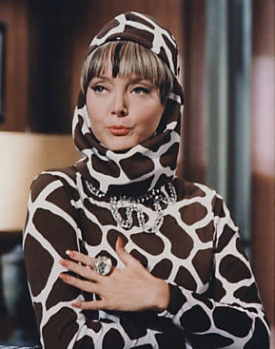
Renee Montoya is an interesting case.  She was created by the writing staff of Batman: The Animated Series to add diversity to the series, and first appeared in the episode "Pretty Poison" (September 1992).  However, she first appeared in comics in March 1992 in Batman #475.  This is due to production delays on the animated series.


Since her introduction, Montoya has become a very popular character. In 2002, she was the lead in the series Gotham Central, and during 52, she took over the role of The Question, and then shortly after that, received a back-up feature in the pages of Batwoman.


She was initially absent (essentially) from the New 52, appearing in one panel of Batwoman #1 (September 2011) and then again in one panel of Batwoman #0 (September 2012).


The implication was that she had died, but in Detective Comics #41 (), she is re-assigned as Harvey Bullock's partner and we learn that she has just been living in Bludhaven this whole time.

Surprisingly, she has not appeared in many adaptations. Beyond various entries in the DC Animated Universe, she has appeared on Gotham...


...as The Question in DC Universe Online...


...in Batman: The Telltale Series...


...and she'll be played by Rosie Perez in the (presumably upcoming, though you can never tell with DC movies) movie Birds of Prey (and the Fantabulous Emancipation of One Harley Quinn).

And that's it. But despite the lack of adaptations, she has managed to make herself an indelible part of the Batman world.